

【Drawing the Future of Bhutan from the Sky】Future of Next-Generation Mobility Opened by “Co-creation” between Bhutan and Japan
Bhutan, the “Country of Happiness” embraced by the steep ridges of the Himalayas. In this country, an important project is currently underway in which experts carrying Japanese expertise solve social challenges through an aerial approach.
In October 2025, “The Project for Development of Drone Usage Environment in Bhutan” was launched as a technical cooperation project of the Japan International Cooperation Agency (JICA). It is being implemented by a joint venture (JV) consisting of three companies: Aero Toyota Corporation, the Japan UAS Industrial Development Association (JUIDA), and Earth System Science Co., Ltd., with the aim of establishing a foundation for sustainable drone utilization in Bhutan.
In this JV, JUIDA is contributing to the construction of an appropriate operational environment in Bhutan, based on expertise in drone safety operational guidelines, human resource development, and institutional development in Japan.
The Steepness of the Himalayas and the Lives of the People
The land area of Bhutan is approximately 38,000 square kilometers, which is about the same size as Kyushu in Japan. About 790,000 people live there.
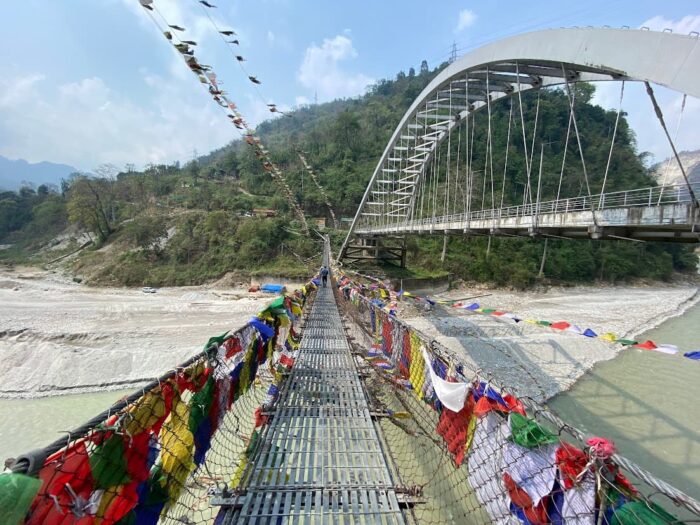
The greatest characteristic of this country lies in its overwhelmingly steep terrain. From an altitude of 200m in the south to high peaks of the 7,000m class in the north, the altitude changes dramatically over a short distance. Powerful rivers such as the Pho Chuu (Father River) and Mo Chuu (Mother River) flow as if weaving through deep valleys, and small settlements are dotted in between.
The staple foods include red rice and white rice, and “Ema Datshi” (chili peppers boiled in cheese), in which chili peppers are eaten as a vegetable, is popular; the country has nurtured its own rich culture. However, this beautiful mountain terrain becomes a major wall in terms of logistics and movement. Unpaved gravel roads and steep bad roads are environments with a heavy movement burden, and it is not uncommon for access to remote areas to be completely cut off during the rainy season or snowfall season.
The Bhutanese government positions drones as the “key to digital economic development” to break through such geographical constraints and is exploring the utilization of drones in multifaceted fields such as logistics, surveying, and disaster response.
The three companies responsible for this project possess different areas of expertise. Aero Toyota Corporation has practical expertise regarding aircraft operation and demonstration, and Earth System Science Co., Ltd. has expertise regarding development planning and social implementation; in addition to these, JUIDA is responsible for expertise in fields such as safe operation of drones, institutional development, and human resource development.
JUIDA is an organization that has repeatedly engaged in initiatives with stakeholders since the dawn of the drone industry in Japan, and for over 10 years, it has accumulated expertise related to the development of safe operation guidelines, human resource development, and institutional formation. Both the achievements and challenges obtained through such experiences have been systematized as current operational know-how.
In this project, based on such accumulation, we aim to contribute to the construction of an institutional and operational environment suited to the actual situation in Bhutan. In particular, in drone operations where both safety and sustainability are required, such expertise is one of the foundational elements.
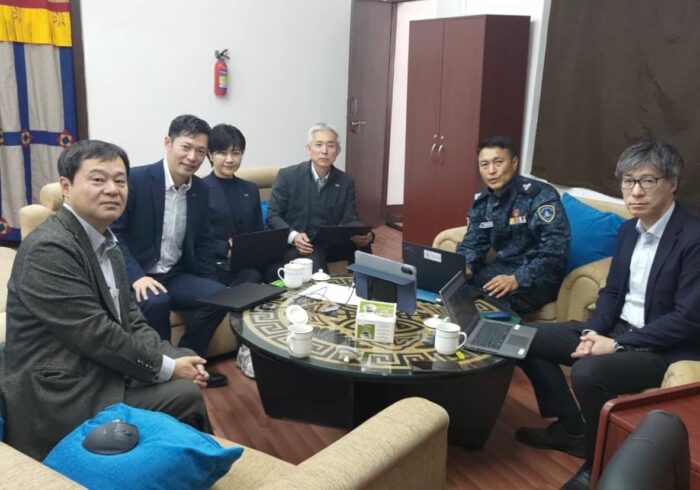
The “First Step” Beginning from Local Dialogue
About half a year since the start of the project. As of March 2026, all major expert members have completed their travel to Bhutan. Based in the capital, Thimphu, we are having repeated face-to-face consultations with a wide range of stakeholders, starting with the counterpart Ministry of Infrastructure and Transport (MoIT), as well as the Bhutan Civil Aviation Authority (BCAA), the Department of Air Transport (DoAT), and even the police and various ministries.
Currently, it is an important phase to build the “foundation” for full-scale operation in the future. We are visiting various local sites such as Punakha and Phuentsholing on foot, and by feeling the local wind and terrain firsthand, we are considering how the mechanism should be to truly harmonize with Bhutanese society.
Furthermore, JICA’s initiatives are widely recognized locally, and an environment is in place where dialogue can proceed based on relationships of trust with relevant organizations.
Specifically, we are deepening partnerships centered on the following perspectives. Especially in the areas of safe operation and institutional development, we are proceeding with considerations utilizing the expertise cultivated in Japan.
- Support for the Roadmap to the Future: Proposals for strategies that contribute to long-term development based on the vision held by Bhutan.
- Sharing Expertise in the Field: Technical verification of how drones can be operated safely under harsh environments with extreme altitude differences.
- Rule-making to Support Peace of Mind: Consideration of standards and rules to guarantee the safety of the sky and allow everyone to use them with peace of mind.
- Trial of Digital Foundations: Consideration of basic systems to support efficient operation.
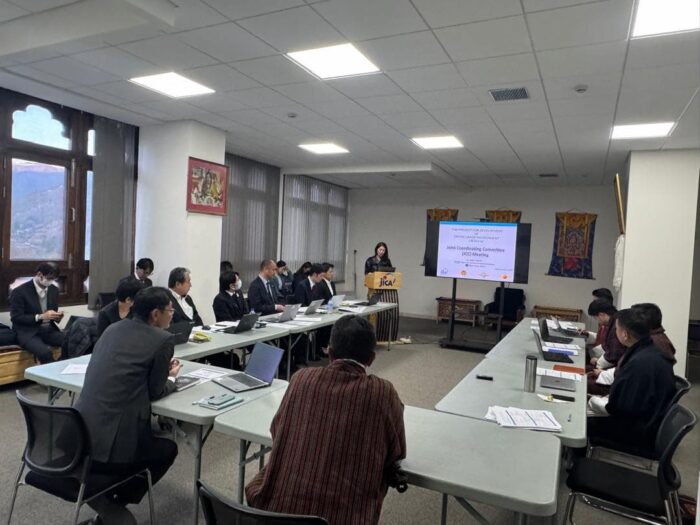
For Both Countries’ National Interests and the Future
Our role is not simply to introduce aircraft. It lies in designing the sustainable “environment” itself so that even after the project ends, the people of Bhutan can nurture this new industry with their own hands.
This activity has a “bidirectional” significance that not only contributes to solving Bhutan’s challenges but also leads to hints for solving regional challenges within Japan, which also has mountainous areas. Until the day when drones flying in the Himalayan sky deliver certain hope to people’s lives, we will continue to take steady steps.
It is expected that the expertise obtained through this initiative will also be returned to the advancement of drone utilization within Japan. We will also take opportunities to communicate the progress of future initiatives.
Project Summary
- Work Name: The Project for Development of Drone Usage Environment in Bhutan
- Performance Period: October 10, 2025 – February 15, 2028
- Implementation Structure: JV by Aero Toyota Corporation (Representative Member), Japan UAS Industrial Development Association (JUIDA), and Earth System Science Co., Ltd.