

Japan Drone 2026 Accelerates Global Collaboration with Record International Participation
Introduction
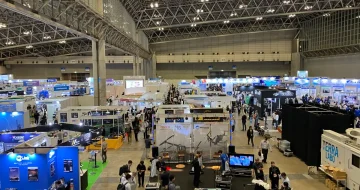
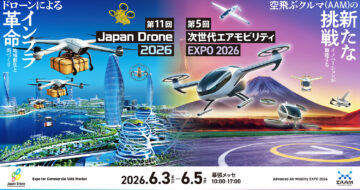
“The 11th Japan Drone 2026” and “The 5th International Advanced Air Mobility (AAM) EXPO 2026” were held over three days from June 3 to 5, 2026, at Makuhari Messe. The opening day faced severe disruptions due to a major typhoon, forcing organizers to delay the opening until 1:00 PM. Despite the severe weather, a total of 20,070 domestic and international visitors attended the three-day event. The exhibition saw a record-breaking 331 exhibiting companies and organizations (up from 285 the previous year), demonstrating the global drone and AAM industry’s unwavering commitment and enthusiasm.
This year’s event transcended the boundaries of a conventional technology showcase. It evolved into a premier venue for international co-creation, where the global community—particularly within Asia—united to address pressing societal challenges through the integration of drone technology.
Growing International Presence
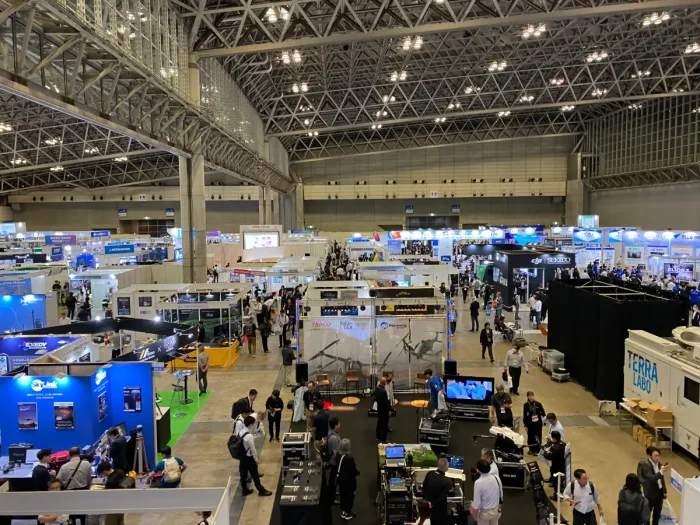
The most remarkable highlight of this year’s exhibition was the rapid expansion of Japan Drone’s footprint in the global market. The number of overseas exhibitors rose to a record high of 66 companies and organizations, up from 64 the previous year. Even more impressive was the geographic diversity, with participating countries and regions expanding from 9 to 14.
These figures reflect not only high expectations for the potential of the Japanese drone market, but also strong support from both public and private sectors worldwide for JUIDA’s long-standing commitment to the safe, secure, peaceful, and constructive use of drones. This year, the event drew high-profile dignitaries, including foreign ambassadors and ministerial-level officials. Their presence fostered a dynamic environment for international business collaboration, uniting a diverse array of stakeholders from Europe, the Americas, and Asia at Makuhari Messe.
The Rise of Asian Innovators
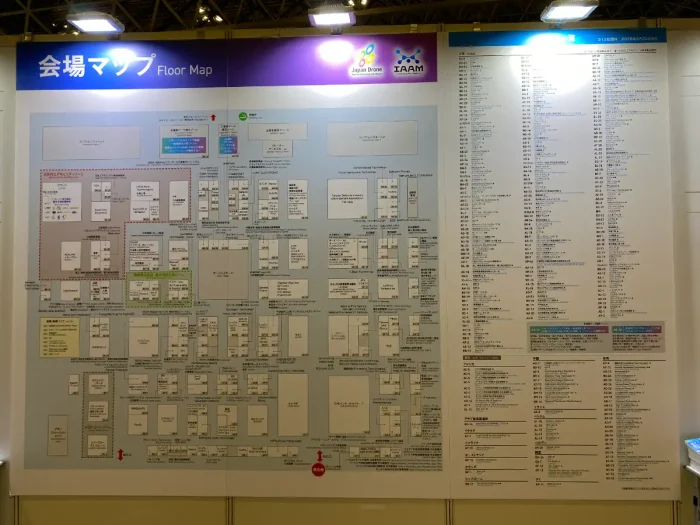
The momentum generated by East and Southeast Asian participants was particularly profound this year.
Building on the success of its 18-company government-led pavilion last year, Taiwan substantially expanded its exhibition footprint. Leveraging its robust supply chain and advanced manufacturing capabilities, Taiwan demonstrated a strong commitment to expanding its presence in the Japanese market, a strategy clearly reflected in its significantly larger exhibition area and highly energetic booths.
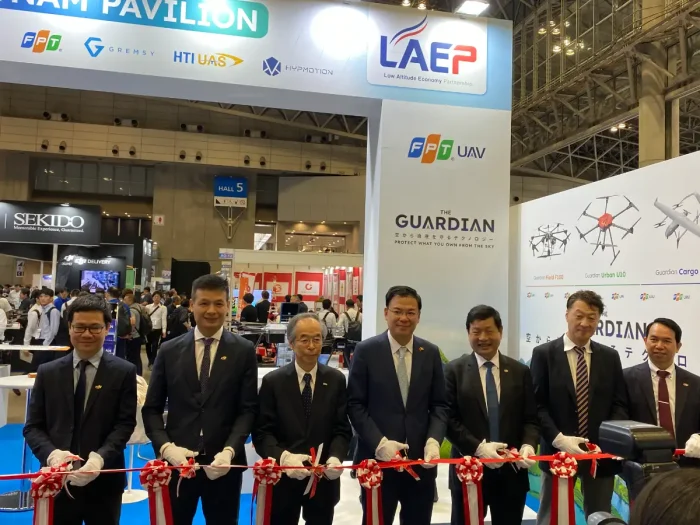
Meanwhile, Vietnam made its debut with a dedicated pavilion that captured the attention of visitors and industry experts alike. Its high-quality exhibits and compelling technical proposals earned widespread acclaim, resulting in FPT UAV’s “Vietnam Pavilion” winning the Judges’ Special Award in the International Category at the Japan Drone & AAM Awards 2026—a remarkable milestone that left a lasting impression on the international stage.
Pioneering International Cooperation
Another major international highlight of this year’s JAPAN DRONE was the visit of an official delegation from Bhutan, which attended the exhibition for the first time. In Bhutan, a nation characterized by its rugged Himalayan terrain, drones are expected to play an increasingly important role in cargo transportation, infrastructure inspection, and disaster response. The delegation actively toured the exhibition, showing strong interest in Japan’s advanced operational expertise and drone technologies. The visit highlighted the importance of international knowledge sharing and human exchange through drone technology. It also provided an opportunity for stakeholders from Japan and abroad to strengthen collaboration in addressing social challenges under JUIDA’s philosophy of the safe, secure, and peaceful use of drones.

Cross-Border Collaboration in Disaster Prevention
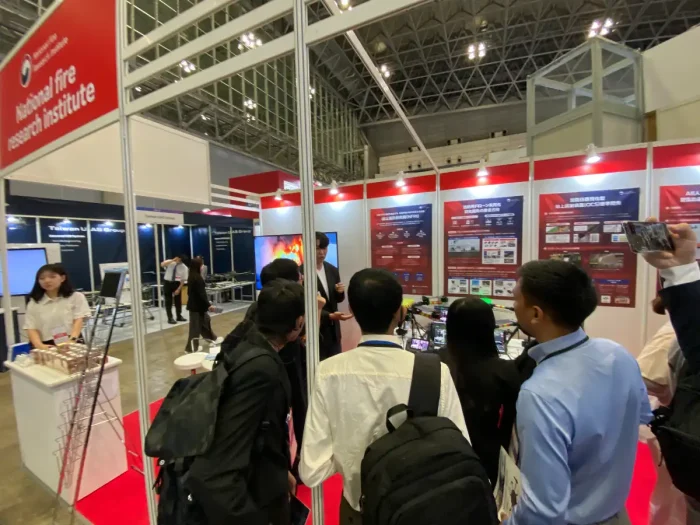
From neighboring South Korea, a highly practical and field-oriented exhibit drew significant attention. The National Fire Agency of the Republic of Korea, alongside the National Fire Research Institute, co-exhibited to showcase their “AI-Powered Standard Ground Control System (GCS) for Missing Person Search and Firefighting Drones.” This cutting-edge system was also honored with the Judges’ Special Award.
In recent years, Japan has faced a rising number of climate-driven wildfires and increasingly severe natural disasters. The field-tested, AI-driven drone technologies developed by the Korean National Fire Agency offer valuable insights for Japan’s disaster prevention and disaster-response efforts. This showcase has laid a strong foundation for future public-private joint projects and collaborative technical initiatives between the two nations.
Stepping into the Next Phase
A decade has passed since the Japanese drone industry began its journey toward full-scale commercial development. This past ten years can be characterized as an “era of foundational readiness,” focused on establishing regulatory frameworks (such as the legalization of Level 4 BVLOS flights), ensuring hardware safety standards, and conducting extensive proof-of-concept testing.
In 2026, the industry officially entered a new chapter: shifting definitively toward full-scale social implementation. The newly introduced “Employment and Career Fair,” which was extremely well received, symbolizes that the industry is maturing into a self-sustaining sector—becoming a vital component of the workforce and social infrastructure. The era of pure experimentation is over. The narrative at the exhibition has shifted toward practical integration: how to deploy drones in daily operations to mitigate labor shortages and resolve the ongoing logistics crisis.

Future Challenges and Outlook
Looking ahead to “The 12th Japan Drone 2027,” scheduled for June 2–4, 2027, an even greater influx of international exhibitors and visitors is fully expected. As the global community focuses its attention on Japan’s market, technology, and its status as a premier platform for peaceful drone utilization, upgrading our international support infrastructure is an urgent priority.
Expanding multilingual content, strengthening professional moderation for international business negotiations, and building robust frameworks for cross-border matchmaking are critical. Embracing the internationalization of Japan Drone with a serious, organized, and strategic approach is an immediate imperative for JUIDA and the Japanese market as a whole.
Conclusion
Despite the disruption caused by the typhoon, Japan Drone 2026 demonstrated the resilience and passion of the drone industry. The overwhelming surge of Asian innovators, the milestone visit of the Bhutanese delegation, and the historic shift toward practical social implementation altogether prove that this exhibition serves as a definitive compass for the future of the global drone industry. JUIDA will continue to serve as a vital global hub where domestic and international expertise converge, striving alongside our global partners to build a prosperous society empowered by drone technology. We look forward to welcoming you back to an even more globally integrated Makuhari Messe next year.
■For more information, please contact:
JUIDA International Relations and Development:ohzora@uas-japan.org