

【Drawing Bhutan’s Future from the Sky】Everyday Life and Disaster Risk in Bhutan Part Two
■Part 1 is available here: (https://uas-japan.org/information/40972/)
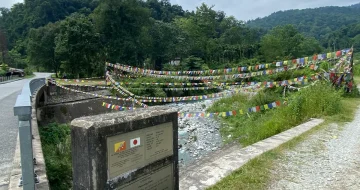
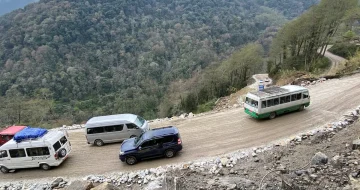
During our field activities in Bhutan in August and September 2026, we conducted site visits and discussions to prepare for demonstration trials in disaster response. These trials are part of JICA’s project to develop an enabling environment for drone use. In Part Two, we explain how they fit into the overall project and recount our experience of heavy rain and flooding in Bangkok on the journey home.
Developing Strategies and Frameworks for Drone Use
The project aims to develop an enabling environment for drone use in Bhutan. Taking local conditions into account, we are working to support sustained drone use through arrangements for safe and efficient operations, demonstration trials in the field, and related activities. Activities involving actual drone flights—the demonstration trials—form part of this broader effort.
The aim is to create an environment in which a wide range of drone users, including public institutions, private companies, individuals, and foreign companies, can fly drones safely. Making flight requirements and application procedures easier to understand, and considering arrangements that make the application process easier to navigate, are important aspects of this work.
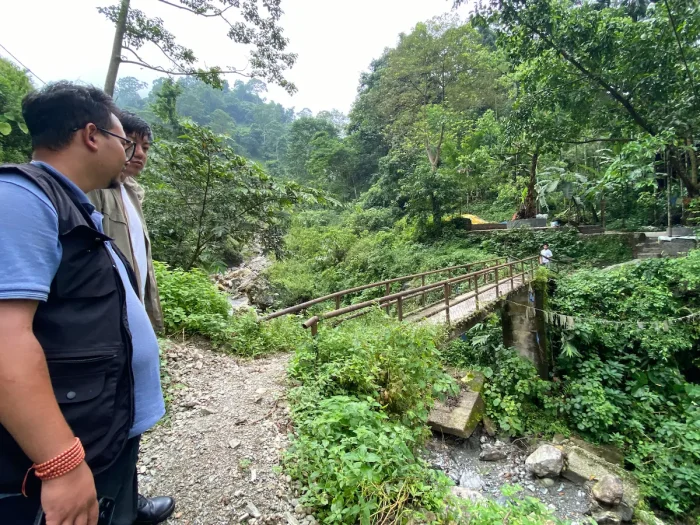
The demonstration trials also provide an opportunity to show specific ways drones can be used in Bhutan and help stakeholders understand their value. The first of two planned rounds of trials will examine uses such as assessing disaster conditions, delivering supplies, and broadcasting evacuation messages using drones. During this visit, we traveled to Punakha, Phuentsholing, and Gelephu to discuss demonstration sites and operational approaches with Bhutanese stakeholders.
Encountering Disaster Disruption in Bangkok on the Journey Home
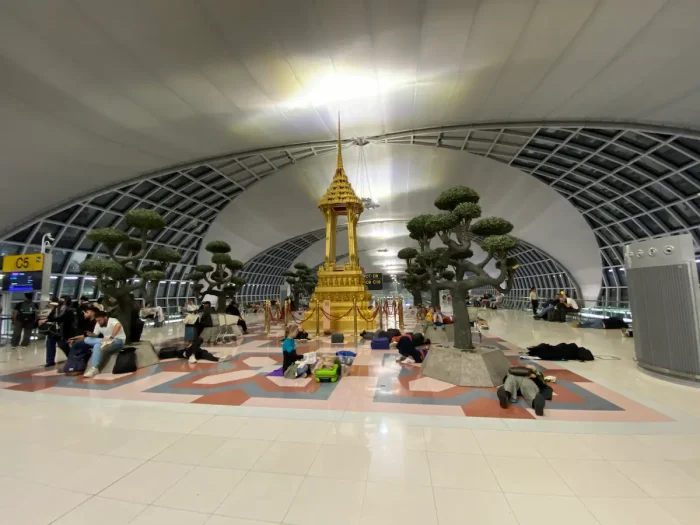
After completing our activities in Bhutan, we also encountered the effects of heavy rain and flooding during our transit through Bangkok on the way back to Japan. Our connecting flight was scheduled to depart about 12 hours after our arrival from Paro, but flooding extended our total time at the airport to more than 24 hours. As the hours passed inside the terminal, we were reminded of a film we had once seen about a man living in an airport. Even on the journey home, we experienced firsthand how disasters can affect travel and everyday life.
A Thai government statement dated September 28 also reported flooding on roads and in residential areas of Bangkok, along with efforts to drain the water and address travel disruptions. Although the urban landscape and transport systems were different, the potential for rain to disrupt daily life and travel was much the same.
The disaster in Nepal that we learned about on the outward journey, the local challenges we examined in Bhutan, and the heavy rain and flooding we encountered in Bangkok on our return all arose in different ways and under different local conditions. Together, these experiences reminded us how closely disaster risk is connected to everyday life.
The same questions apply to those of us living in Japan. When travel becomes impossible or conditions are unclear, who needs to be informed, how should information be shared, and how can support be delivered? Preparedness is not something that is completed once and for all. It needs to be reviewed repeatedly through practical experience and training.
Sharing Disaster Response Experience to Strengthen Preparedness
In Japan, JUIDA supports the use of drones in disaster response and works on disaster preparedness exercises and human resource development. Understanding needs on the ground and coordinating with relevant organizations to operate safely are also relevant to our preparations for the demonstration trials in Bhutan.
Our work in Bhutan takes account of local terrain, communications conditions, and the organizational arrangements of the agencies involved. By bringing experience from Japan together with knowledge from Bhutan, we consider approaches suited to the conditions in each location. The knowledge gained through this cooperation is expected to inform future disaster response efforts in both countries.
Preparing for the Next Demonstration with Wider Drone Use in View
The first round of demonstration trials is scheduled to take place during our next visit. Building on the site visits and discussions during this trip, preparations are continuing through further coordination and safety checks. The trials will examine how drones can help in the planned scenarios and identify operational challenges.
The demonstration trials provide an opportunity to show how drones can be used and the value they offer, with a view to sustained use by a wider range of users. A central principle of the project is to create an environment in which Bhutanese institutions and local communities can identify drone applications that address their own challenges and take the lead in advancing these efforts. The Japanese team, including JUIDA, will support that process by respecting local knowledge and experience while sharing expertise developed in Japan. By bringing together experience from both countries, we aim to build cooperation that supports communities in both. In our next report, we plan to cover the demonstration trials in Bhutan as part of this ongoing effort.
- Work Name: The Project for Development of Drone Usage Environment (Bhutan)
- Performance Period: October 10, 2025 – February 15, 2028
- Implementation Structure: JV by Aero Toyota Corporation (Representative Member), Japan UAS Industrial Development Association (JUIDA), and Earth System Science Co., Ltd.
■For inquiries:
JUIDA International Team:ohzora@uas-japan.org